
Bringing home your Mini Bernedoodle puppy is an exciting milestone! This guide will help you prepare for a smooth transition and set your puppy up for success from day one.
We believe the best puppy placements happen when families feel confident and prepared. You’re not just getting a puppy—you’re gaining a partner committed to supporting you through every stage of your dog’s development. This guide covers everything from puppy-proofing your home to establishing routines that will serve you both for years to come.
Timeline at a Glance: Most preparation should happen 2-4 weeks before pickup. Some items (like finding your veterinarian and researching trainers) can start even earlier. Other elements (like specific training techniques) will develop naturally in your first weeks together.
Before Your Puppy Arrives
(2-4 weeks out)
1. Home Preparation
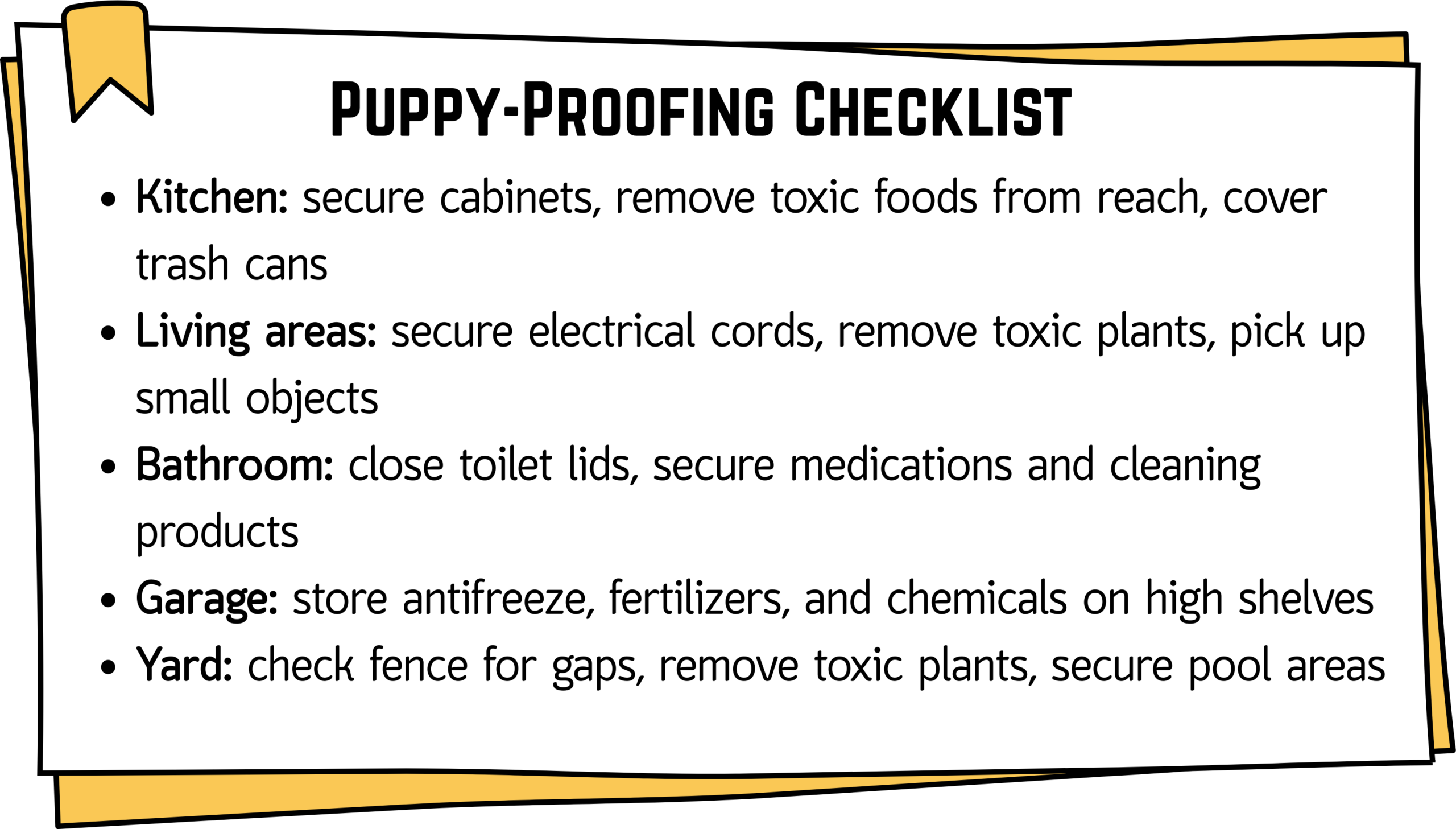
Puppy-Proofing Your Space
Mini Bernedoodle puppies are curious, mouthy, and surprisingly resourceful. A thorough puppy-proofing session will prevent accidents and keep your sanity intact.
Creating a Puppy Zone
Your puppy will need a designated safe space where they can relax, eat, and sleep without being overwhelmed. This might be a corner of your kitchen, a section of your family room with an exercise pen, or a laundry room. The key is consistency—this becomes their “home base” while they’re learning house rules.
Securing Outdoor Spaces
Even if you have a fenced yard, walk the perimeter before your puppy arrives. Mini Bernedoodles are smaller than you might expect, especially as young puppies. Check for:
2. Essential Supplies
What You Actually Need
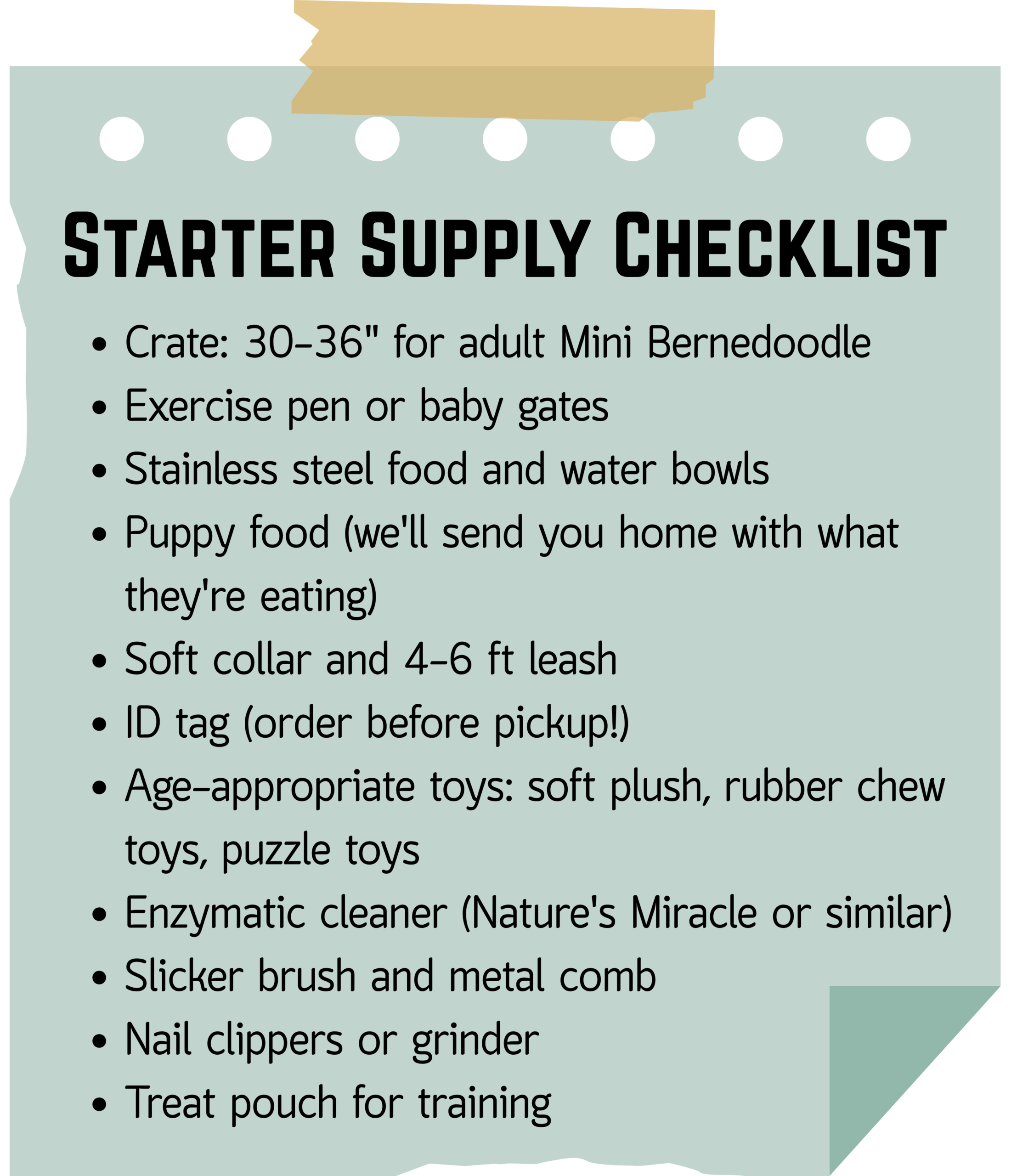
The pet store can be overwhelming, but you don’t need everything. Here are the true essentials:
Crate Sizing Guide
For Mini Bernedoodles, a 30-36″ crate works well for most adults. If you’re purchasing a crate for your puppy to grow into, get one with a divider panel so you can adjust the space as they grow. The crate should be large enough for an adult dog to stand, turn around, and lie down comfortably—but not so large that a puppy can potty in one corner and sleep in another.
What Can Wait
You don’t need a full wardrobe of dog clothing, a dozen different toys, or expensive training gadgets. Focus on the basics first. As you get to know your puppy’s personality, you’ll learn what they love and what sits unused in the toy basket.
3. Finding Your Veterinary Partner
Your veterinarian will be one of your most important partners in your dog’s health and longevity. Finding the right fit before your puppy comes home reduces stress during those critical first weeks.
What to Look For:
Scheduling Your First Visit
Book your puppy’s first vet appointment within 72 hours of pickup. This isn’t because we expect problems—all puppies come with a health guarantee and recent vet check. This early visit establishes care, allows your vet to review health records, and gives you peace of mind as you start your journey together.
Questions to Ask at Your First Visit:
4. Training & Education Resources
We raise our puppies using Puppy Culture protocols, which means your puppy has already been introduced to positive reinforcement training, early neurological stimulation, and age-appropriate socialization. You’re building on a strong foundation.
Our Training Philosophy
We believe in positive reinforcement training that builds confidence and strengthens your bond. Your Mini Bernedoodle is intelligent, eager to please, and sensitive—they’ll thrive with encouragement and clear communication, not harsh corrections.
Recommended Resources:
Finding a Trainer
Not all trainers are created equal. Look for certifications like CPDT-KA (Certified Professional Dog Trainer) or graduates of reputable programs.
5. Family Preparation
Discussing Responsibilities
Before your puppy arrives, have an honest family conversation about who will handle which tasks. Who takes the puppy out first thing in the morning? Who’s responsible for evening training sessions? Which child will fill the water bowl?
Puppies thrive on consistency. When everyone knows their role, your puppy learns faster and stress decreases for the whole household.
Setting House Rules in Advance
Decide now: Is the puppy allowed on furniture? Where will they sleep? Are certain rooms off-limits? What commands will you use (and will everyone use the same words)?
It’s much easier to establish rules from day one than to change them later. A puppy who’s never been allowed on the couch won’t beg to get on the couch. A puppy who’s been invited up “just this once” will be confused when the rules suddenly change.
Managing Visitors
Everyone will want to meet your adorable new puppy. That’s wonderful—but it needs to happen on your terms. In the first week especially, limit visitors to close family and friends who understand puppy manners (no grabbing, quiet voices, letting the puppy approach them). Save the neighborhood parade for week two or three.