
What is a Bernedoodle?
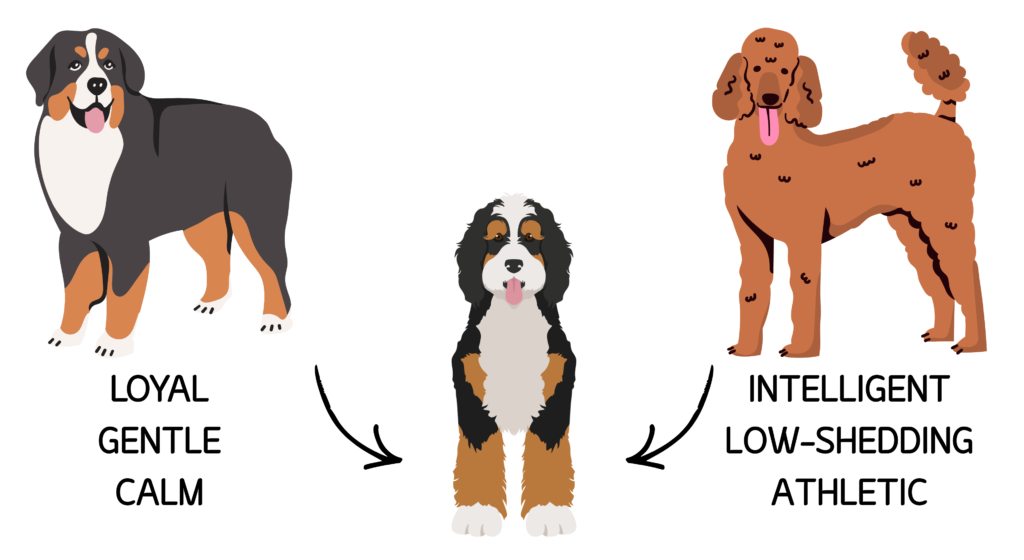
The Bernedoodle is a designer dog breed created by crossing a Bernese Mountain Dog with a Poodle. This intentional crossbreed was developed in the early 2000s to combine the gentle, loyal temperament of the Bernese Mountain Dog with the intelligence and low-shedding coat of the Poodle. The result is a dog that captures the best qualities of both parent breeds: the sweet, affectionate nature of the Bernese with the smart, trainable personality of the Poodle.
Bernedoodles have quickly become one of the most sought-after doodle breeds, and it’s easy to see why. They’re known for being wonderful family companions who form deep bonds with their people while maintaining a playful, goofy personality that brings joy to every household they join.
Temperament
Bernedoodles are gentle souls with big hearts. They’re known for their affectionate, loyal nature and their desire to be close to their family members. Don’t be surprised if your Bernedoodle becomes your shadow, following you from room to room just to be near you. This breed thrives on human companionship and genuinely enjoys being part of family activities.
One of the standout characteristics of Bernedoodles is their intelligence. Thanks to the Poodle influence, these dogs are quick learners who excel in training. They’re eager to please and respond well to positive reinforcement, making them a great choice for first-time dog owners who are committed to consistent training. That intelligence also means they need mental stimulation—puzzle toys, training sessions, and interactive games will keep your Bernedoodle happy and well-behaved.
Bernedoodles are typically wonderful with children, showing patience and gentleness that makes them excellent family dogs. They also tend to get along well with other pets when properly socialized. Their playful side comes out during playtime, but they’re generally calm and content to relax with their family when indoors. The combination of playfulness and calmness makes them adaptable to various family dynamics and lifestyles.

Size & Appearance
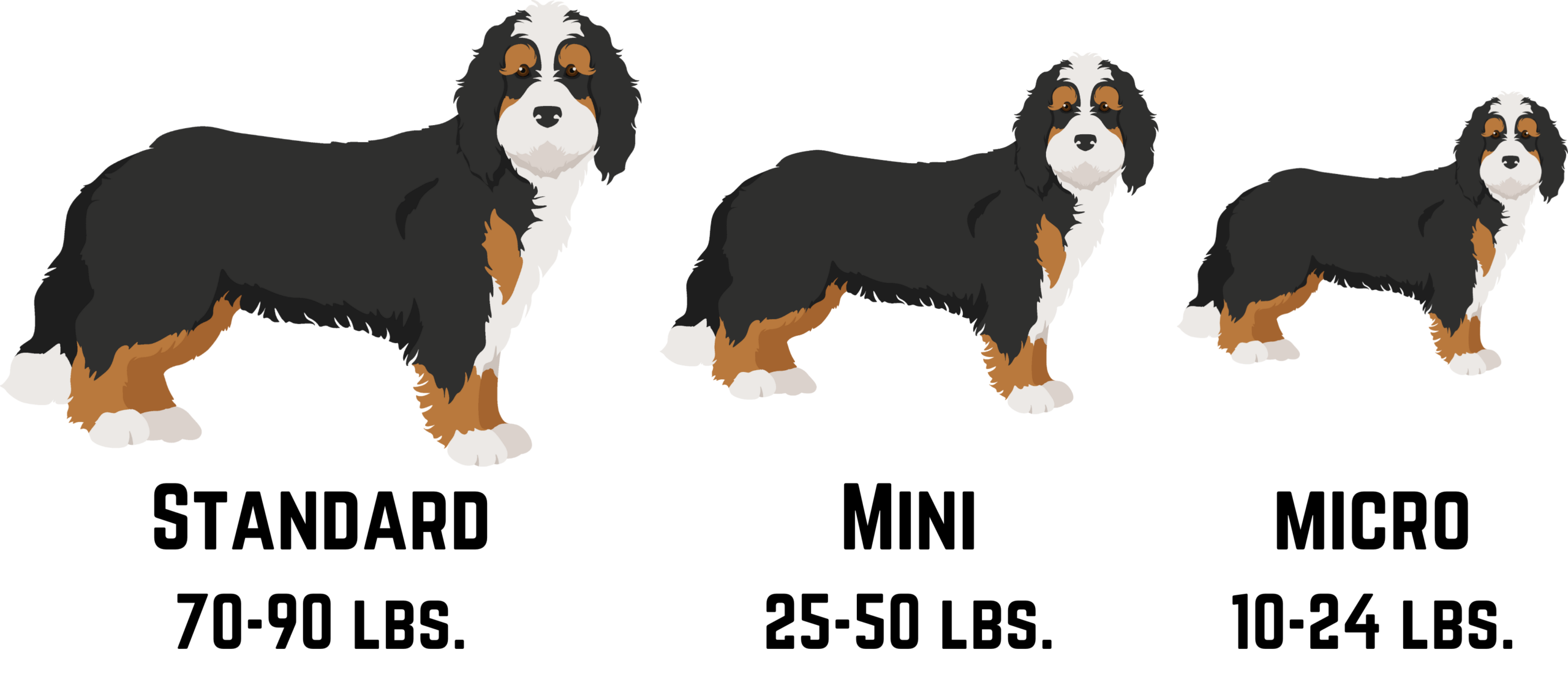
Bernedoodles come in three size variations: Standard, Miniature, and Micro (or Tiny). The size depends on whether a Standard Poodle, Miniature Poodle, or Toy Poodle is used in the breeding. At our program, we specialize in Mini Bernedoodles, which we believe offer the perfect balance—small enough for various living situations but sturdy enough to be excellent family companions.
Mini Bernedoodles typically stand between 18-22 inches tall at the shoulder and weigh between 25-49 pounds when fully grown. Keep in mind that size can vary based on the parents’ sizes and genetics, so there’s no guarantee of exact adult size, but reputable breeders can give you a good estimate based on their experience with their specific breeding lines.
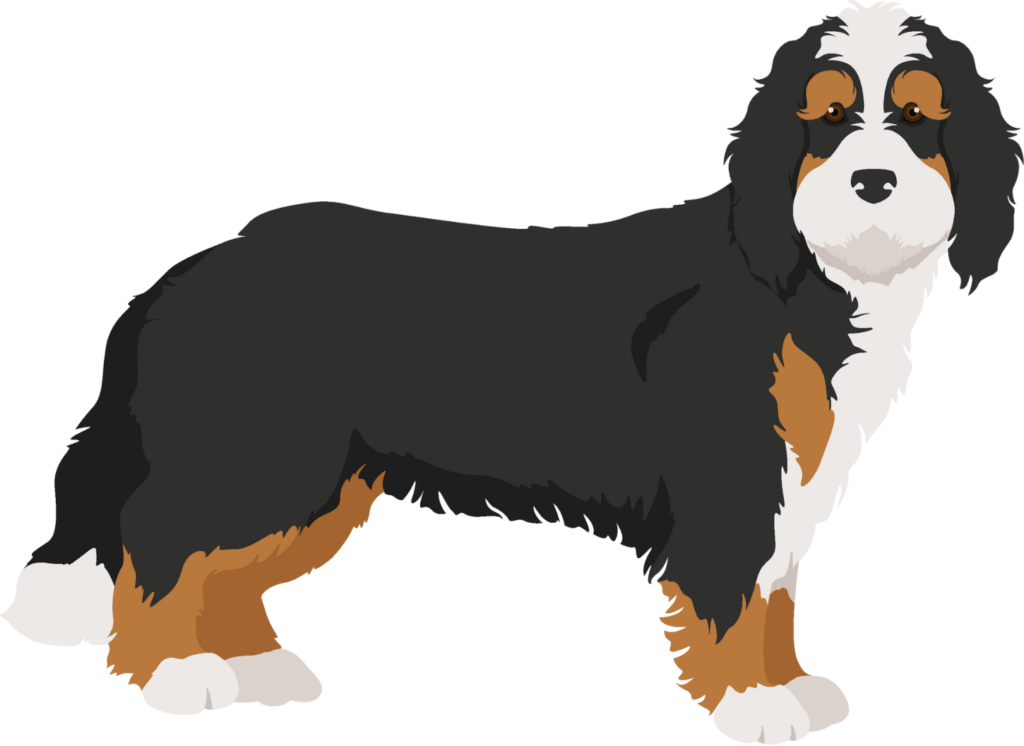
The Bernedoodle coat is one of their most distinctive and beloved features. Most Bernedoodles have a wavy to curly coat that sheds minimally, though some may have straighter coats with slightly more shedding. Coat curliness often relates to furnishings (the longer facial hair and eyebrows) which come from the Poodle side. The classic Bernedoodle sports the beautiful tri-color pattern inherited from the Bernese Mountain Dog—black, white, and rust—though they can also come in bi-color, phantom, sable, and solid colors. Each Bernedoodle has unique markings, making every puppy one-of-a-kind.
Health & Lifespan
One of the advantages of Bernedoodles is heterosis, commonly known as “hybrid vigor.” When two purebred dogs from different breeds are crossed, the resulting puppies often benefit from increased genetic diversity, which can reduce the likelihood of inheriting breed-specific health issues that affect purebred dogs. However, it’s important to understand that hybrid vigor doesn’t make Bernedoodles immune to health concerns—it simply means they may have a reduced risk compared to their purebred counterparts.
Mini Bernedoodles typically live 13-17 years, which is longer than Standard Bernedoodles (12-15 years) and significantly longer than purebred Bernese Mountain Dogs, whose lifespan averages only 7-10 years. The Poodle’s longevity and overall health contribute positively to the Bernedoodle’s life expectancy.
This is why health testing of parent dogs is absolutely crucial. Responsible breeders conduct comprehensive health clearances on their breeding dogs before breeding them, including OFA certifications for hips, elbows, cardiac health, and patellas, as well as extensive genetic testing through panels like Embark. This testing helps ensure that breeding dogs don’t carry or express health conditions that could be passed to puppies. When evaluating breeders, always ask to see complete health testing documentation for both parents—this is the foundation of producing healthy puppies with the best chance at long, vibrant lives.
Like all dogs, Bernedoodles should receive regular veterinary care, maintain a healthy weight, get appropriate exercise, and receive preventive care throughout their lives to maximize their health and longevity.

Care & Maintenance
Exercise Needs
Mini Bernedoodles are moderately active dogs who need daily exercise to stay healthy and happy. Plan for at least 30-60 minutes of activity each day, which can include walks, playtime in a fenced yard, fetch, or interactive games. They enjoy outdoor adventures like hiking but are equally content with a good game of fetch or a training session. Mental exercise is just as important as physical exercise for this intelligent breed, so incorporating puzzle toys, scent games, and training into their routine will help prevent boredom and unwanted behaviors.
Grooming Requirements
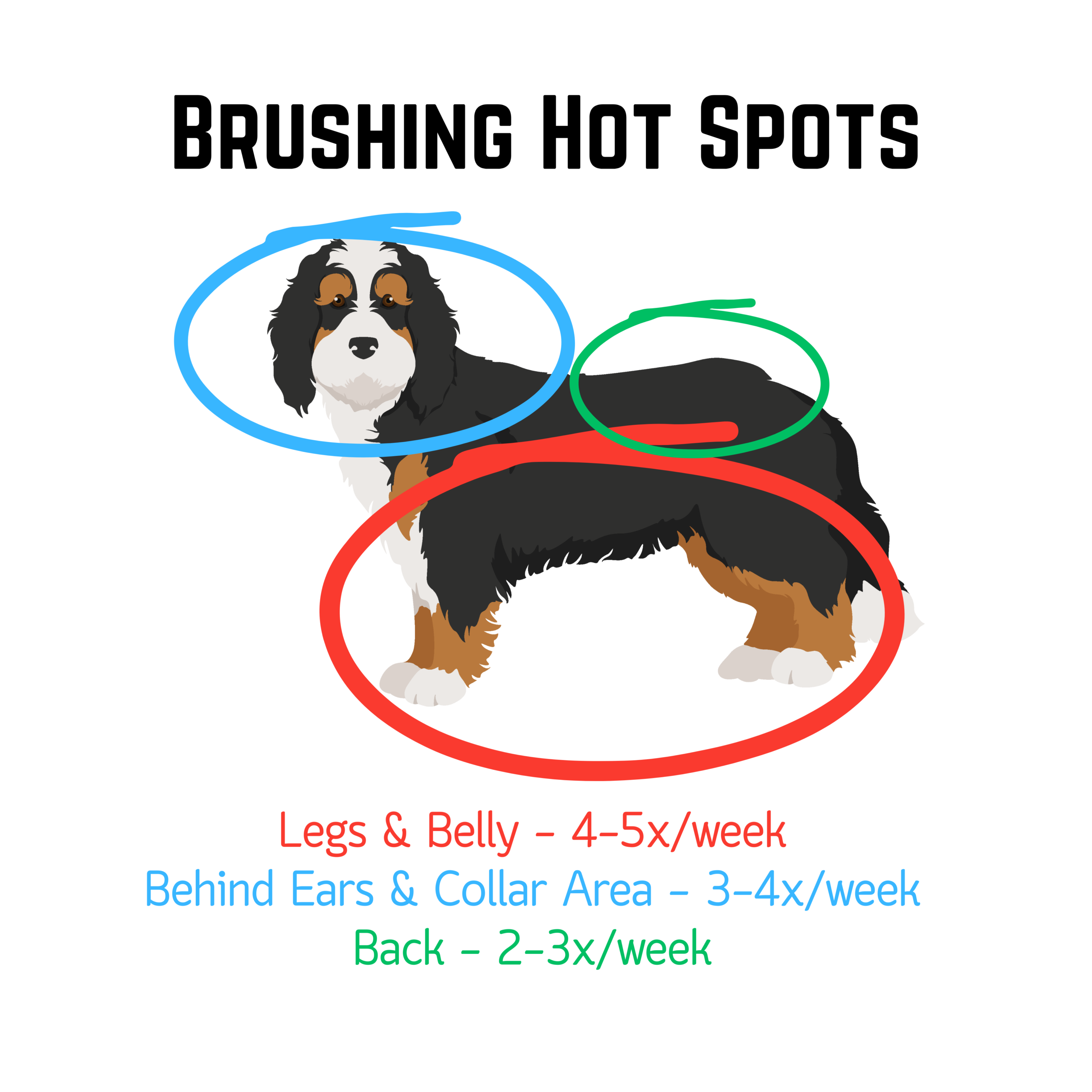
The Bernedoodle’s beautiful coat requires regular maintenance. Plan to brush your Bernedoodle 3-4 times per week (daily during heavy shedding periods if your dog has a straighter coat) to prevent matting and keep the coat healthy. Professional grooming every 6-8 weeks is recommended to keep your dog looking and feeling their best. Many owners choose to keep their Bernedoodles in a shorter “puppy cut” for easier maintenance.
In addition to coat care, Bernedoodles need regular nail trims, ear cleaning (especially important for dogs with floppy ears that can trap moisture), and dental care. Starting these grooming routines early in puppyhood will help your Bernedoodle become comfortable with handling and make grooming a positive experience throughout their life.
Training & Socialization
Bernedoodles are highly trainable and respond beautifully to positive reinforcement training methods. Start training and socialization early—puppy kindergarten classes are an excellent investment. Expose your Bernedoodle puppy to various people, environments, sounds, and experiences during their critical socialization period (8-16 weeks) to help them develop into confident, well-adjusted adults.
These intelligent dogs can sometimes develop a stubborn streak, but consistency, patience, and reward-based training will bring out their eagerness to please. Many Bernedoodles excel at activities like obedience, rally, therapy work, and even agility once they’re physically mature.
Is a Bernedoodle Right for Your Family?
Bernedoodles can be wonderful additions to many types of homes, but they’re not the right fit for everyone. These dogs thrive in homes where they’ll receive plenty of attention, companionship, and mental stimulation. They’re not suited for families who are away from home for long hours or those looking for a low-maintenance pet.
Bernedoodles are an excellent choice if you:
Consider another breed if you:
Bringing a Bernedoodle into your family is a 13-17 year commitment. These dogs form incredibly strong bonds with their people and need families who will prioritize their well-being throughout their entire lives. If you’re ready for that commitment, a Bernedoodle can bring immeasurable joy, laughter, and love to your home.
When you’re ready to add a Bernedoodle to your family, take time to research and find a responsible breeder who prioritizes health testing, genetic diversity, proper socialization, and the overall well-being of their dogs and puppies. The foundation of a healthy, well-adjusted Bernedoodle starts long before that puppy is born—it starts with ethical breeding practices and dogs who have been carefully selected and health tested.